Adapting Arenas: Venue Changes Influencing Complex Betting Layers in Racing, Tennis, and Soccer
Amir Albrecht · May 31, 2026

Adapting Arenas: Venue Changes Influencing Complex Betting Layers in Racing, Tennis, and Soccer
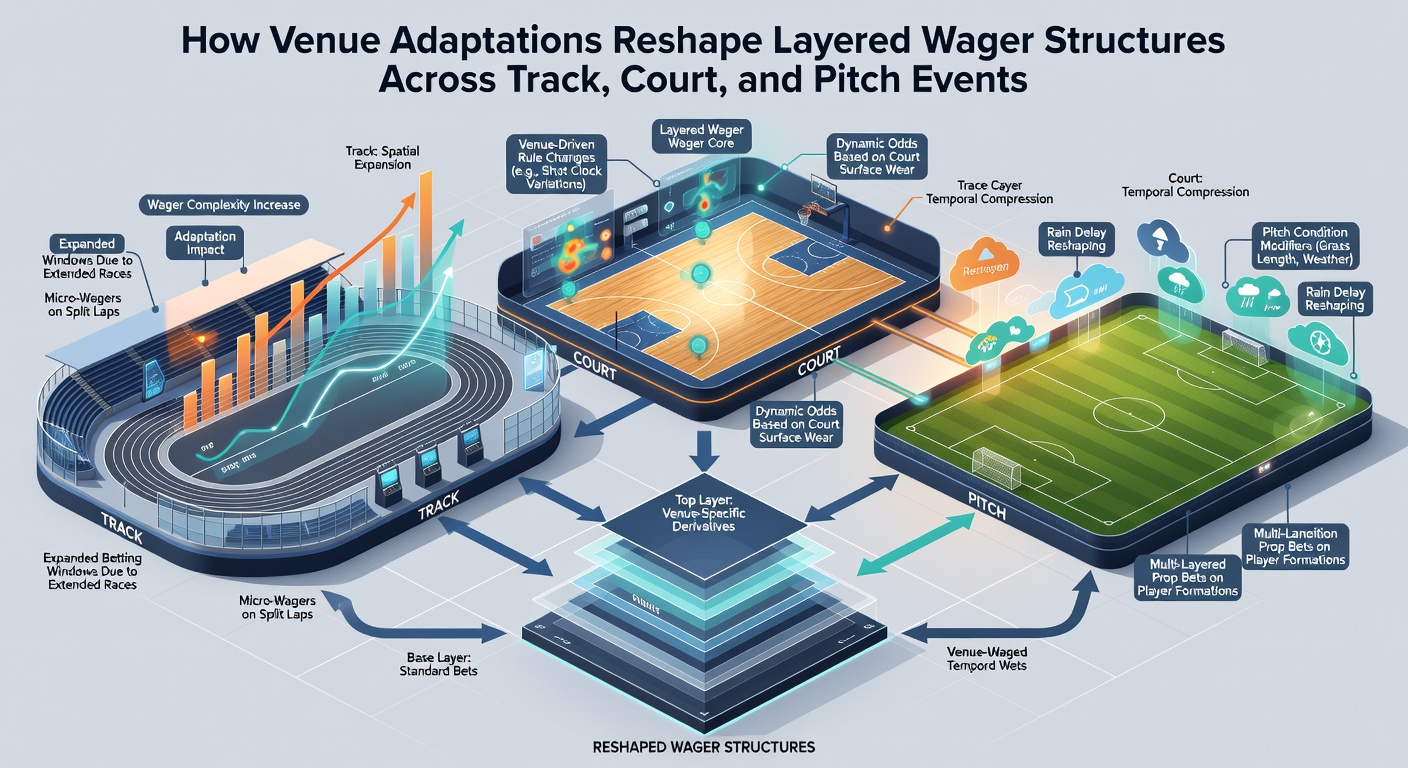
Venue adaptations continue to alter how layered wager structures operate across track, court, and pitch events, with data from multiple international sources showing measurable shifts in odds compilation and accumulator construction. Observers note that changes in surface materials, lighting systems, and facility layouts prompt betting operators to recalibrate their multi-tiered offerings, while regulators in various regions prepare for broader implementation schedules set around May 2026.
Track Events and Surface Modifications
Horse racing venues undergo frequent track resurfacing projects that directly affect tote pool calculations and layered accumulator products, and research from the Australian Racing Board indicates that synthetic track installations have led to adjusted payout structures in events held during transitional weather periods. Those who monitor pool dynamics report that when venues introduce new drainage systems or re-grade bends, the variance in finishing times prompts operators to layer additional safeguards into exotic bet types such as trifectas and first-four combinations.
Studies conducted across North American circuits reveal that these physical upgrades correlate with refined probability models used by tote operators, whereas older dirt surfaces often produce wider spreads in morning-line odds that carry through to final pool distributions. Experts at the National Council on Problem Gambling have documented how such adaptations influence the sequencing of multi-race wagers, creating fresh parameters for bettors who construct accumulators spanning several meetings in a single day.
Court Surfaces and Tennis Tournament Adjustments
Tennis facilities regularly switch between clay, grass, and hard-court configurations, and these transitions reshape how in-play wager layers are constructed for both singles matches and tournament accumulators. Data compiled by the International Tennis Federation shows that court pace ratings change measurably after resurfacing, which in turn alters the statistical inputs that betting platforms use when offering progressive accumulator bonuses tied to break-point conversions or set totals.
One analysis of European indoor venues found that modified lighting arrays and court temperature controls produce distinct service-hold percentages that operators incorporate into live betting matrices, and this affects the stacking order within multi-match wager structures. Researchers note that when venues extend court dimensions slightly or adjust net heights for exhibition events, the resulting data streams prompt recalibrations in the secondary and tertiary layers of complex tennis accumulator products.
Pitch Conditions and Football Event Frameworks
Football stadiums experience pitch renovations that include hybrid grass installations, under-soil heating, and drainage enhancements, and these modifications influence how layered accumulator bets are priced across domestic leagues and international tournaments. Figures released by the European Gaming and Betting Association demonstrate that improved pitch consistency correlates with tighter goal-margin distributions, which operators then reflect in the construction of multi-leg soccer accumulators that combine match results with corner counts and card tallies.
Observers have tracked how temporary stands and reconfigured seating areas at major grounds alter crowd density patterns, which in turn affect referee decision data used in certain prop bet layers. When venues install new pitch covers or adjust irrigation schedules ahead of high-profile fixtures, the resulting changes in ball behavior feed directly into the algorithms that determine payout thresholds for progressive accumulator pools.
Regulatory Timelines and Industry Responses
Preparations for regulatory adjustments scheduled around May 2026 have prompted several governing bodies outside the United Kingdom to review how venue-specific data should be disclosed to operators constructing layered products. Canadian provincial regulators, for instance, have issued guidance requiring clearer reporting on surface conditions at racetracks and stadiums, while Australian state authorities have begun piloting standardized metrics for court and pitch adaptations that feed into betting transparency frameworks.
These developments coincide with technological upgrades at venues themselves, where sensor networks now capture granular information on track moisture, court friction, and pitch wear that operators integrate into real-time wager recalibrations. Industry reports indicate that such integration reduces discrepancies between pre-event odds and live adjustments, particularly when accumulators span events held at differently adapted locations on the same day.
Conclusion
Venue adaptations across racing tracks, tennis courts, and football pitches continue to generate new data inputs that reshape the architecture of layered wager structures, and international regulatory timelines set for May 2026 are expected to formalize additional disclosure requirements around these physical changes. Operators and data providers alike have responded by refining their models to account for surface and facility variations, ensuring that accumulator products reflect the evolving conditions at each event location.