Biometric Correlations Across Disciplines Shape Multi-Leg Selections in Arena and Track Events
Amir Albrecht · Sep 6, 2026
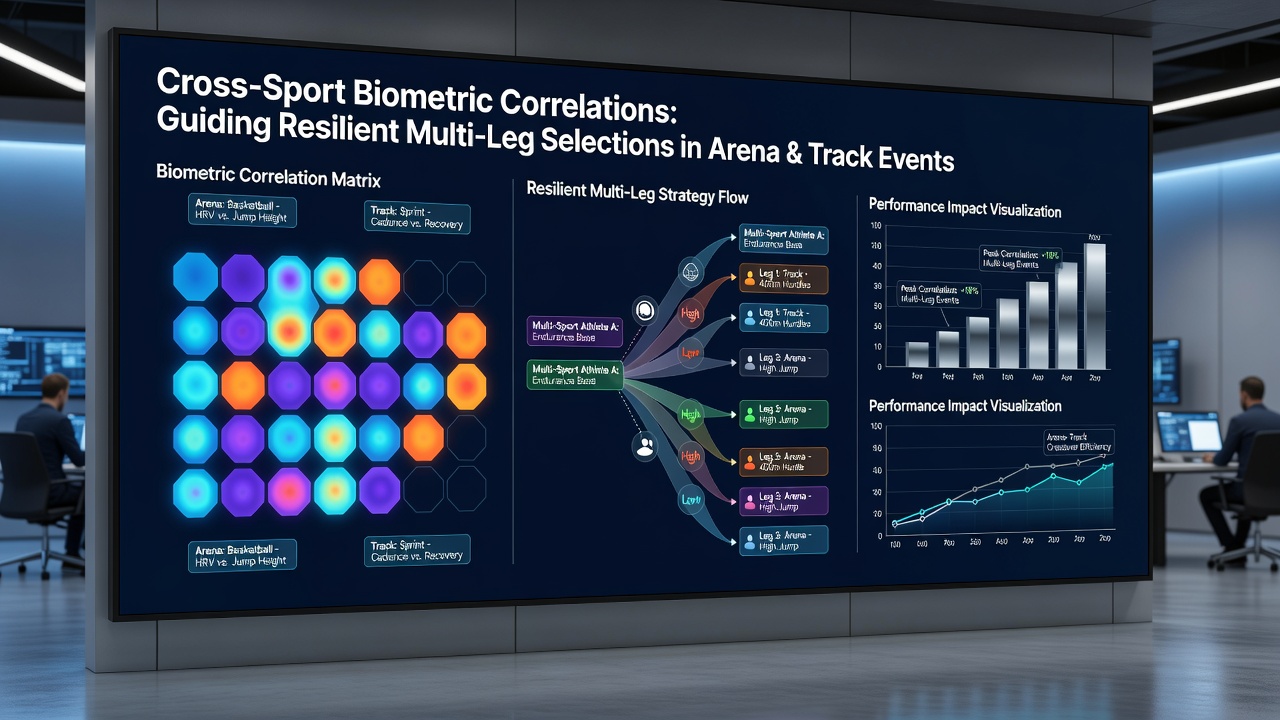
Biometric Correlations Across Disciplines Shape Multi-Leg Selections in Arena and Track Events
Biometric data from multiple sports now informs selections for multi-leg wagers involving arena competitions such as basketball and tennis alongside track events like sprints and middle-distance races, according to studies from the International Olympic Committee research network. Heart rate variability, muscle oxygen saturation, and stride mechanics collected in one discipline frequently align with performance markers in others, creating patterns that analysts track when building resilient selections.
Core Biometric Metrics and Cross-Sport Links
Researchers at the Australian Institute of Sport have documented how resting heart rate and recovery time measured after basketball games correlate with 400-meter and 800-meter track times recorded in the same athletes during off-season testing. These links appear because both activities rely on similar anaerobic thresholds and lactate clearance rates, allowing data from one setting to flag potential consistency in the other. Muscle activation patterns captured via electromyography during tennis rallies also match force output readings from starting blocks in short track events, providing another measurable bridge between the two environments.
September 2026 training camps for several national teams have incorporated wearable devices that stream real-time oxygen uptake and ground reaction force data. Observers note that athletes showing stable biometric readings across both arena drills and track sessions maintain lower injury rates in subsequent multi-week competition blocks. This stability becomes relevant for multi-leg selections because consistent physiological profiles reduce the chance of sudden performance drops across successive events.
Data Collection Methods in Arena and Track Settings
Teams gather information through chest-strap monitors, in-shoe sensors, and court-embedded force plates. In arena environments, basketball players produce repeated high-intensity bursts that generate distinct heart rate recovery curves, while tennis players yield longer-duration patterns tied to rally length. Track athletes supply linear speed and acceleration metrics that researchers cross-reference with the court-based data sets. When correlations exceed established thresholds, selection models assign higher weights to athletes whose profiles match across both categories.
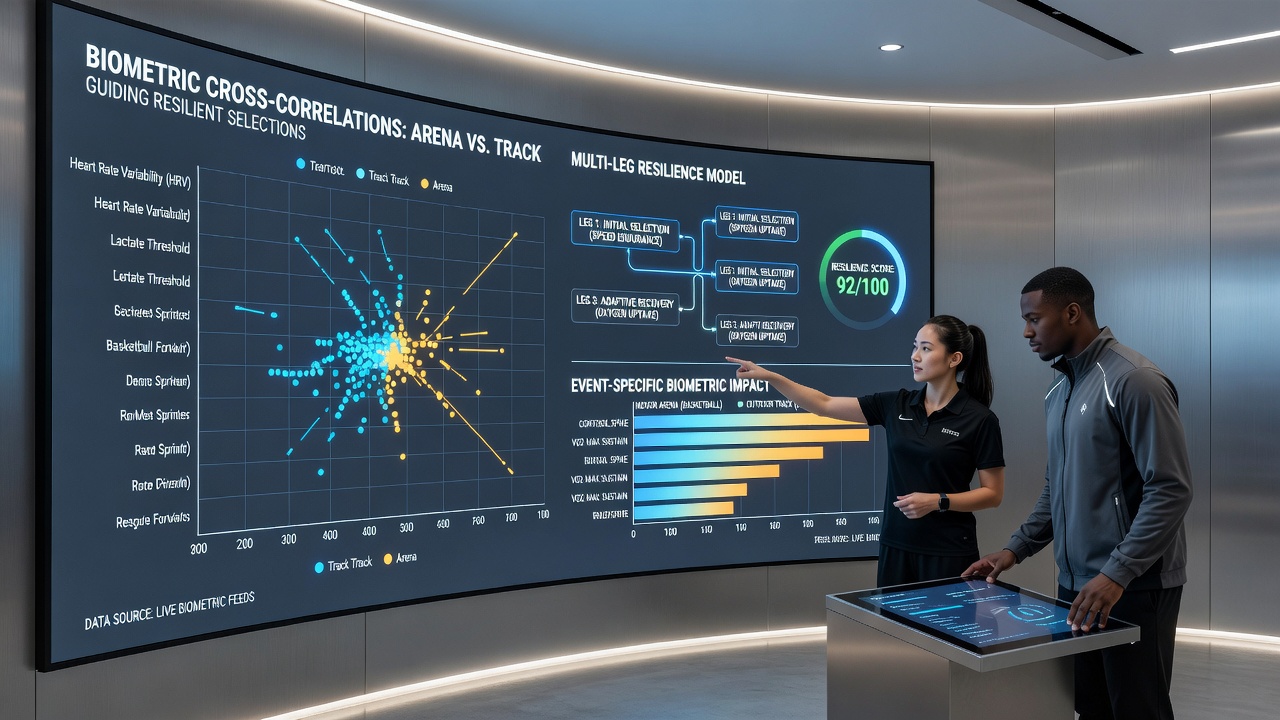
Studies published by the Canadian Sport Institute Pacific demonstrate that stride frequency measured on indoor tracks aligns with lateral movement efficiency recorded during basketball defensive drills. The same research group found that athletes with matched biometric scores across these metrics completed multi-event schedules with fewer medical withdrawals. Such findings supply concrete reference points for constructing selections that span different event types.
Application to Multi-Leg Selection Frameworks
Analysts combine the biometric correlations into layered models that evaluate each leg of a multi-event sequence. One leg might involve a basketball player whose recovery metrics match those of a track sprinter on the same roster, while another leg incorporates a tennis athlete whose serve velocity patterns track with middle-distance running economy. Because the underlying physiological data sets overlap, the overall selection gains resilience against isolated fluctuations in any single sport.
European sports science consortia have released aggregated reports showing that athletes with synchronized biometric profiles across arena and track disciplines sustain performance levels through extended tournament schedules. These reports emphasize measurable thresholds rather than individual outcomes, allowing selection systems to filter candidates based on objective data alignment. The approach supports multi-leg constructions that remain viable even when external conditions such as scheduling density or venue changes occur.
Limitations and Ongoing Refinement
Biometric correlations remain sensitive to factors including age, training history, and competition level. Data sets collected from elite performers do not always translate directly to developing athletes, requiring separate calibration for each population. Additionally, environmental variables such as court surface hardness and track temperature affect sensor readings, so models incorporate venue-specific adjustments. Continued collection through 2026 and beyond allows refinement of the correlation coefficients used in selection algorithms.
Conclusion
Cross-sport biometric correlations now supply measurable inputs for multi-leg selections spanning arena and track events. Data from heart rate variability, muscle activation, and movement mechanics collected in basketball, tennis, and track disciplines create overlapping profiles that support consistent evaluation across multiple legs. Research institutions continue to expand these data sets, refining thresholds and improving alignment accuracy for future application.