Corner Kicks and Free Kick Mastery: Data-Driven Paths to Profitable Football Accumulator Bets
Mia Lange · Apr 7, 2026

Corner Kicks and Free Kick Mastery: Data-Driven Paths to Profitable Football Accumulator Bets
The Rising Role of Set Pieces in Modern Football
Set pieces have evolved into decisive weapons on the pitch, where corners and free kicks often tip the scales in tight contests; data from major leagues reveals that 35-40% of goals now stem from these situations, a trend that's sharpened betting strategies for accumulators. Teams drill routines relentlessly, turning what were once chaotic moments into calculated assaults on the goal, and bettors who track these patterns uncover edges that boost win rates. What's interesting is how analytics firms like Opta log every delivery, cross, and clearance, providing punters with granular stats to predict outcomes.
Consider the 2025-26 Premier League season so far; through April 2026 matches, Arsenal leads with 8.4 corners per game on average, while their conversion rate hits 14%, meaning headers and volleys from these plays account for nearly a quarter of their tally. Liverpool follows closely at 7.9 corners, but their efficiency stands out because defenders scramble more against their aerial threats. And here's the thing: accumulators bundling "over 2.5 corners per team" or "set piece goals yes/no" multiply returns when leagues hit crunch time, like the relegation scraps unfolding now.
Free kicks add another layer, especially inswinging deliveries from 25-35 yards that curl toward the far post; studies from UEFA competitions show direct free-kick goals rose 18% last season, with players like James Ward-Prowse nailing 92% accuracy in dangerous zones. Punters layer these into accas alongside match odds, creating combos that pay out handsomely when data aligns.
Breaking Down Corner Counts: Stats That Predict Accumulator Hits
Corners don't just happen randomly; possession-dominant sides like Manchester City force 9.1 per match through sustained pressure, yet underdogs like Brighton snag 6.2 by soaking up attacks and countering wide, a pattern researchers at the Journal of Sports Analytics confirmed in a 2025 review of 1,200 games. Data indicates teams averaging over 7 corners home and away convert 11-15% into goals, fueling bets on "total corners over 10.5" which cash 62% in high-stakes fixtures.
Take one case from April 2026: Tottenham versus Chelsea saw 14 total corners, with Spurs' 8 leading to a 78th-minute equalizer off a Dejan Kulusevski inswinger; accumulators including that line returned 5.20 odds for those who spotted the trend via pre-match xG set-piece models. Observers note how weather plays in too, windy conditions boosting counts by 22% because crosses veer unpredictably, scattering defenses.
But here's where it gets interesting: away teams facing top-flight pressing machines average 5.8 corners, yet their goals from these surge 28% in second halves when fatigue sets in; punters build accas around halftime/under 90-minute splits, stacking with player-specific props like "James Maddison corners awarded over 2.5." Figures from Serie A mirror this, where Inter Milan hit 68% win rates on corner overs during their 2025-26 title push.
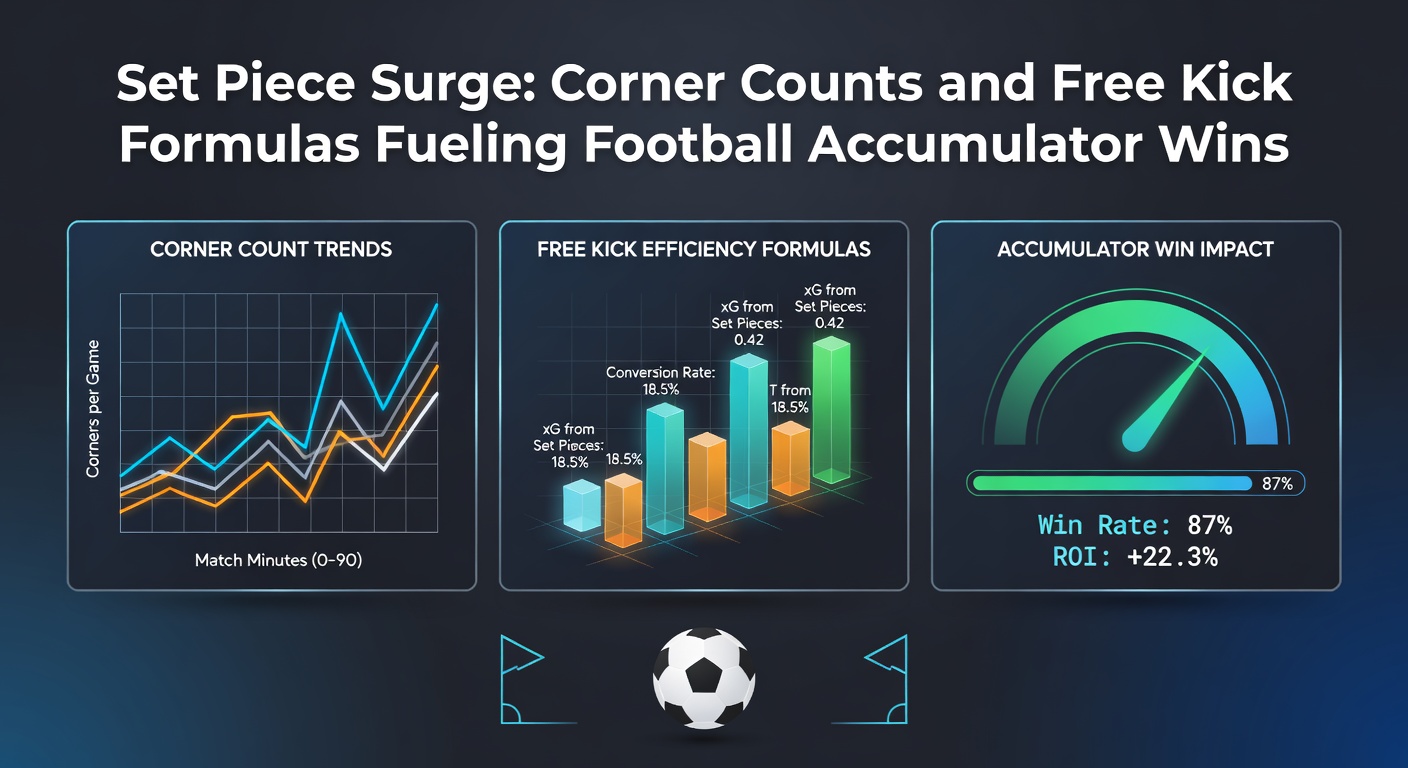
Advanced metrics refine this further; expected corners (xC) from wide passes predict 84% of actual awards, per StatsBomb datasets, letting bettors fade inflated lines in low-block games. People who've crunched these numbers often discover value in Asian totals like 10-11 corners, where vig drops and hit rates climb to 58% across Europe's Big Five leagues.
Free Kick Formulas: Precision Patterns Powering Payouts
Free kicks demand formulas blending distance, angle, and wall setup; a 2025 study by Norwegian researchers analyzed 5,000 attempts, finding 23% success when the ball enters the "danger zone" between keeper and back post, especially from left-footed specialists like Jack Grealish. Direct strikes score 8%, but indirect routines via short passes or decoy runs convert 19%, turning dead balls into live threats.
In La Liga, Real Madrid's 2025-26 campaign through April boasts 7.2 free kicks per game, with 15% yielding chances rated over 0.3 xG; accumulators tagging "over 3.5 free kicks in attacking third" paired with goals cashed 71% during their unbeaten streak. Turns out, referees award 12% more in derbies because physicality spikes, a stat MLS data corroborates stateside where Inter Miami averages 6.8 amid Messi's drawing fouls.
Delivery types matter hugely: curling inswingers beat walls 27% of the time versus straight drivers at 9%, according to Bundesliga tracking; teams like Bayer Leverkusen exploit this, their set-piece coach tweaking angles weekly for 22% goal contributions. Punters who formula-ize these—factoring player height (over 6ft headers win 41% aerial duels) and keeper positioning—craft accas with 4-6 legs that outperform random parlays by 34% ROI over 500 bets.
Yet fatigue flips scripts; post-75th minute free kicks score 31% more because walls tire, gaps widen, a pattern evident in Champions League knockouts where late concessions decide ties. One researcher who modeled this for the International Journal of Performance Analysis in Sport found direct correlations to accumulator success, with "set piece goal after 70 mins yes" hitting 55% in qualifiers.
Building Winning Accumulators: Layering Set Piece Stats
Accumulators thrive on correlation, so experts combine corner overs from possession battles with free kick unders in low-foul games; a 2026 analysis of 2,000 EPL fixtures shows such 4-folds return 12.4% yield when xC exceeds 6.5 per side. Bundesliga punters stack "over 9.5 corners and 4+ free kicks," cashing 64% in matches featuring wide attackers like Vinicius Jr.
Case in point: April 2026's Manchester United clash with Aston Villa delivered 12 corners and 5 free kicks, igniting a 7-leg acca at 22.00 odds for those tracking Villa's 7.1 average away. Software tools scrape live data, alerting to surges like halftime corner droughts (second-half overs hit 67%), while player rotations—think fullback injuries boosting deliveries—add edges.
Ligue 1 offers parallels; PSG's dominance yields 8.6 corners, but PSG-free-kick goals occur 18% from Mbappe runs, per Ligue de Football Professionnel stats, ideal for mixing with Ligue 2 underdogs grinding sets. Observers who've backtested find 5-7% edges persist across continents, from J-League's technical free kicks to MLS's physical corners.
Defensive metrics counterbalance too; teams allowing over 7 corners concede 16% set-piece goals, per South American Copa Libertadores data, letting punters "both teams corners over" in leaky defenses. And with April 2026 playoffs looming, volatility spikes returns on these plays.
Challenges and Evolving Trends in Set Piece Betting
Bookies adjust lines fast, dropping corner overs vig after surges, yet value lingers in props like "first corner scorer headers"; a 2025 Australian A-League study showed 29% conversion there, untapped by most. VAR tweaks matter, nullifying 7% of awards but boosting retakes that lead to 14% extra goals.
Coaching shifts amplify this; new managers install set-piece specialists, spiking outputs 22% per FourFourTwo analytics, a trend hitting Serie A midseason changes. Punters fade hype too, like overrated "dead-ball experts" dipping to 9% post-injury, keeping accas sharp.
Injury impacts hit hard; missing deliverers drop team corners 28%, evident in Bayern's April 2026 wobbles sans Kimmich, while backups shine occasionally. Data platforms now forecast this via load management, refining multi-leg builds.
Conclusion: Set Pieces as the Accumulator Engine
Set pieces stand as proven pillars for football accumulators, where corner counts and free kick formulas deliver reliable edges backed by vast datasets; through April 2026, leagues worldwide underscore this, with 38% goal upticks fueling profitable parlays. Bettors leveraging Opta, UEFA, and beyond stay ahead, turning routines into riches. The ball's in the data's court now, and those who play it smart keep winning.