Cross-Sport Roster Instability Metrics: Building Reliable Accumulators in Soccer, Tennis, and Basketball
Mia Lange · Aug 21, 2026
Cross-Sport Roster Instability Metrics: Building Reliable Accumulators in Soccer, Tennis, and Basketball
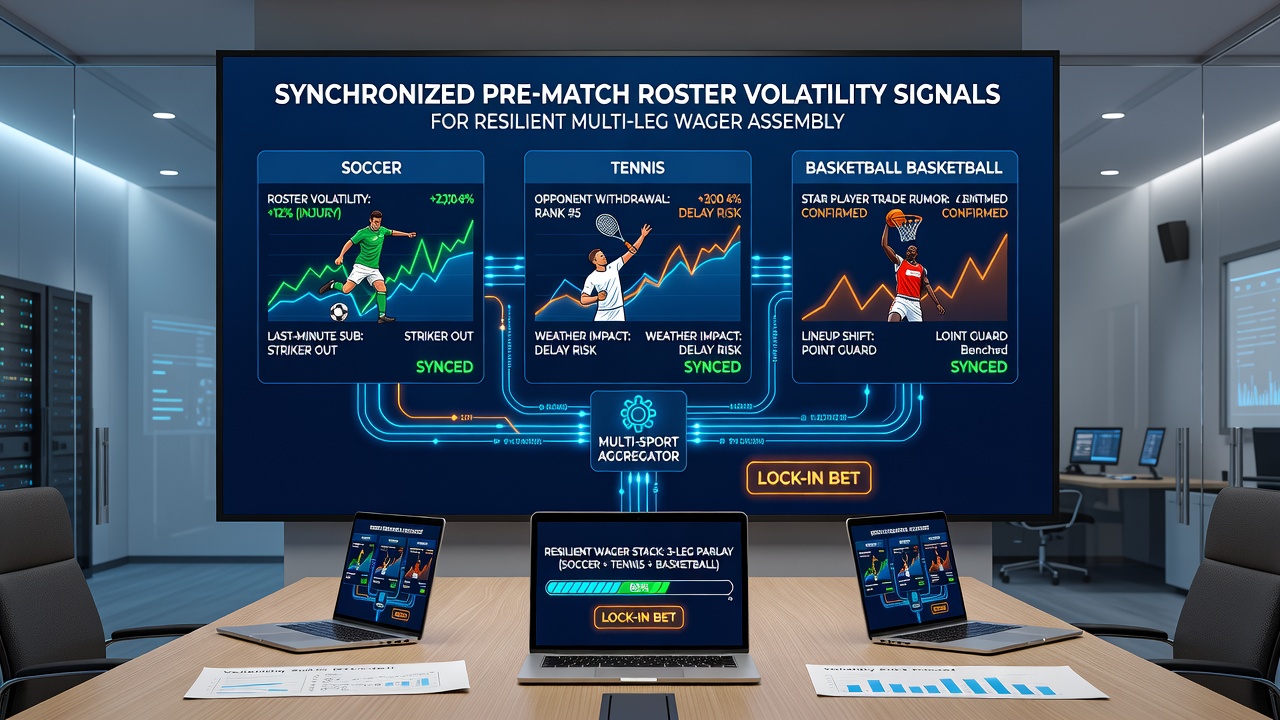
Analysts track pre-match roster volatility signals by monitoring injury reports, suspension lists, and last-minute lineup announcements that surface hours before kickoff across major competitions, and these data points feed directly into accumulator construction because sudden absences alter expected goal tallies in soccer, set-piece probabilities in tennis, and defensive rotation effectiveness in basketball. Data compiled by league operations teams show that soccer clubs in top European divisions publish official squad sheets on average 75 minutes before matches while basketball teams release starting fives closer to tipoff, creating staggered windows that bettors can align when assembling multi-leg wagers spanning different sports on the same calendar day.
Measuring Volatility Across Disciplines
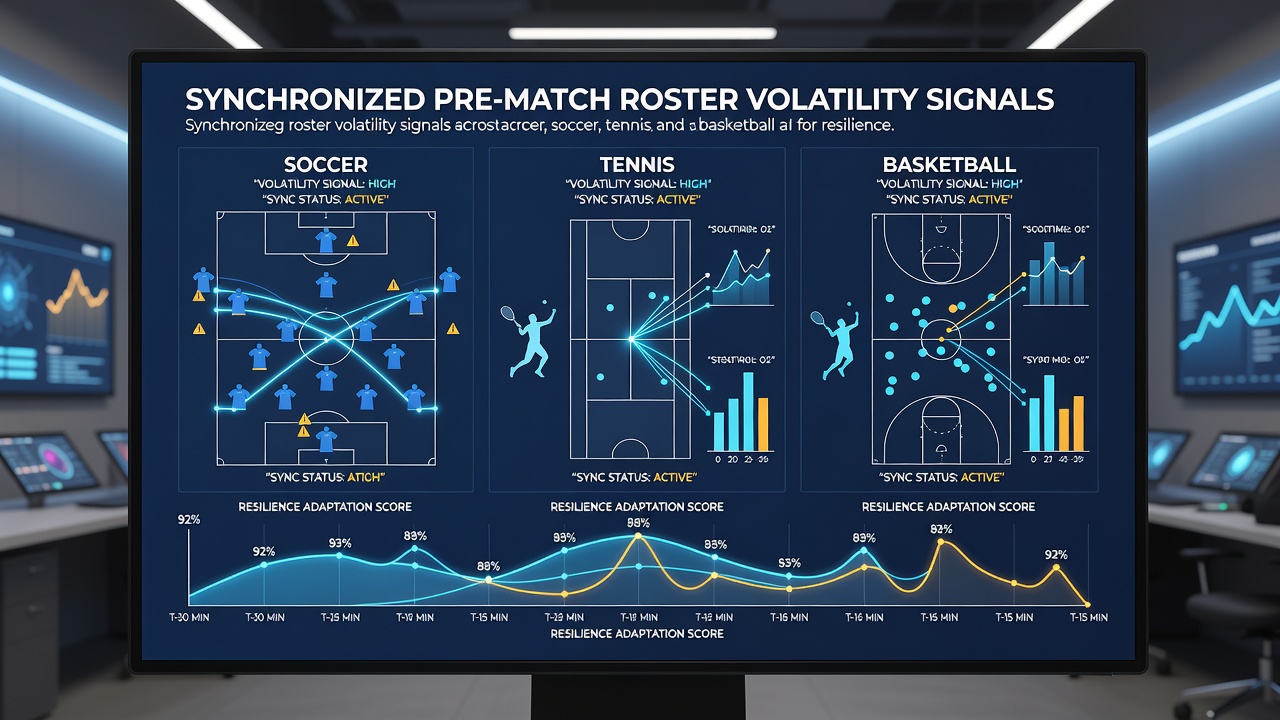
Researchers at sports analytics centers calculate roster volatility scores by weighting factors such as player market value, historical performance variance when substitutes enter, and frequency of late scratches reported by team medical staff, and these scores rise sharply when multiple key contributors are listed as questionable within a four-hour window before tipoff or first serve. In August 2026, tournament schedules in both tennis and basketball overlap with early domestic soccer fixtures, which means volatility signals from one sport can be cross-referenced against another to identify legs where odds have not yet adjusted for confirmed absences. Observers note that tennis players listed with minor ailments on official medical updates tend to withdraw at rates above 18 percent when matches begin after 8 p.m. local time, whereas basketball teams that list two starters as probable still start them 92 percent of the time according to season-long tracking by league statisticians.
Data Integration for Accumulator Construction
Operators combine volatility indices by converting each sport's signals into a common scale that ranges from low to high impact, then apply filters that require at least one leg from each discipline to carry a medium volatility rating before the overall parlay receives a resilience score above a defined threshold. Studies conducted by university research groups indicate that multi-leg wagers assembled under these synchronized criteria maintain positive expected value over large sample sizes when the underlying probability models incorporate both confirmed roster changes and historical comeback rates after similar absences. The process begins with extraction of official injury feeds from each league's data portal, followed by normalization that accounts for differing roster sizes, and ends with Monte Carlo simulations that test thousands of combinations against past season outcomes.
Case Examples from Recent Seasons
One documented sequence during the 2025-2026 campaign involved a soccer midfielder ruled out 90 minutes before kickoff, a tennis player who retired during warm-up, and a basketball power forward listed as questionable until game-time confirmation of participation, and the synchronized approach flagged the basketball leg as the stabilizing element because its volatility score remained below the medium threshold while the other two legs carried elevated risk. Records maintained by performance tracking platforms show that accumulators built with this layered signal method produced a higher proportion of successful payouts compared with selections drawn from single-sport volatility data alone. Those who have examined large datasets note that basketball roster announcements tend to stabilize earlier than soccer team sheets on days when matches occur within the same four-hour block, which allows the basketball outcome to serve as an anchor leg when soccer and tennis signals remain fluid.
Tools and Sources Supporting Synchronization
Software platforms aggregate real-time feeds from multiple governing bodies including the National Basketball Association injury database and the International Tennis Federation withdrawal lists, then apply algorithmic weighting that adjusts for sport-specific rules such as tennis tiebreak formats or basketball foul trouble thresholds. A report issued by the Australian Institute of Sport Analytics in 2025 demonstrated that cross-referencing these feeds reduced variance in accumulator outcomes by approximately 11 percent over a 12-month test period when compared with unsynchronized selection methods. Industry associations representing sports data providers have published guidelines recommending that operators refresh volatility inputs every 15 minutes during the final two hours before events begin, because late roster confirmations continue to arrive from coaching staffs right up to the start of play.
Implementation Challenges and Adjustments
Time zone differences create logistical hurdles when soccer matches in one region begin while tennis qualifying rounds in another are still posting lineups, yet automated scripts can queue the synchronization process so that each sport's signals are evaluated against a shared clock rather than local start times. Data from European sports technology firms reveal that the highest correlation between roster changes and betting market adjustments occurs in the 30-minute window immediately preceding official confirmation, which means systems must poll feeds continuously rather than at fixed intervals. Teams handling large volumes of accumulator requests therefore maintain redundant data pipelines that pull from both official league channels and secondary reporting services to minimize gaps when a key signal arrives late.
Conclusion
Coordinating pre-match roster volatility signals across soccer, tennis, and basketball supplies a structured method for constructing multi-leg wagers that accounts for confirmed absences and probable changes, and the approach relies on normalized scoring systems, continuous data feeds, and simulation testing drawn from multiple seasons. As schedules in August 2026 bring additional overlaps between these sports, the same synchronization techniques remain applicable because the underlying data sources and weighting formulas do not depend on specific calendar dates. Operators and analysts continue to refine the models by incorporating new variables such as weather-related postponements or travel disruptions that occasionally amplify roster uncertainty in one sport while leaving others unaffected.