Decoding Surface-Specific Pace Shifts: How Track Conditions and Court Textures Drive Cross-Sport Multi-Leg Value
Theo Hayes · Jun 28, 2026
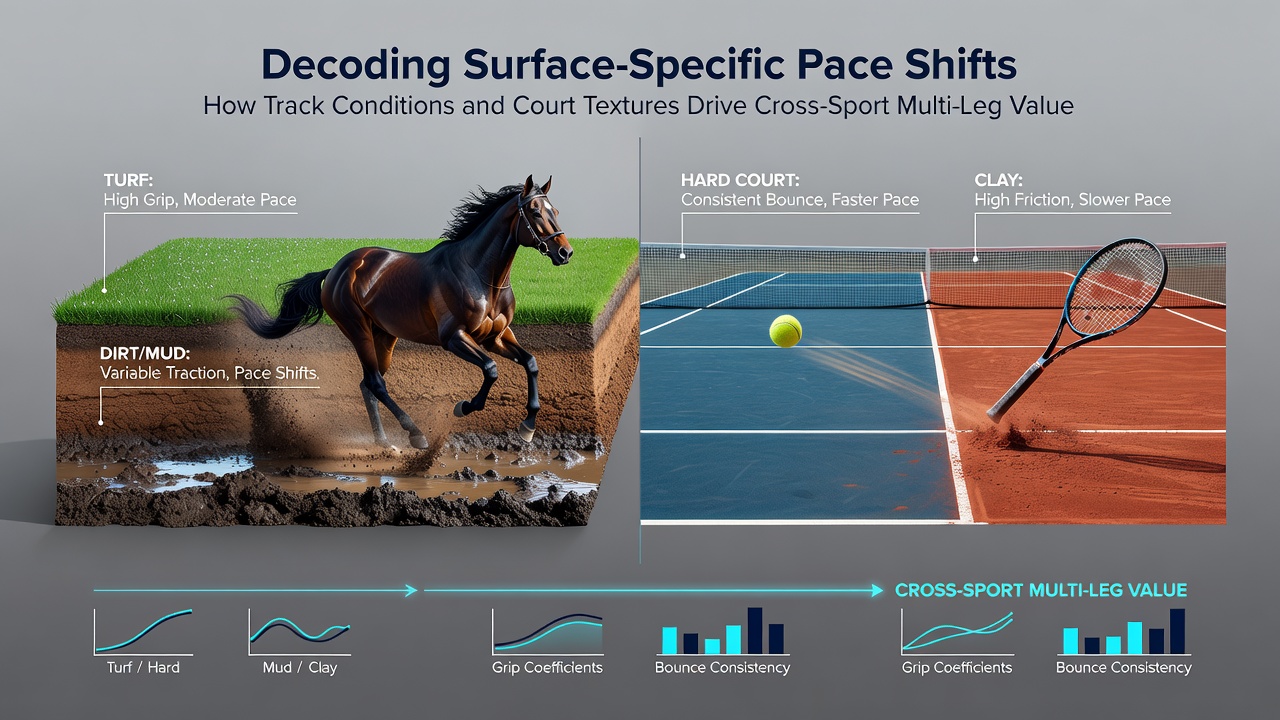
Decoding Surface-Specific Pace Shifts: How Track Conditions and Court Textures Drive Cross-Sport Multi-Leg Value
Track conditions and court textures create measurable differences in speed and strategy across multiple sports, and these variations have become central to constructing multi-leg bets that span horse racing, tennis, and other athletic competitions. Data from racing authorities and tennis federations show how surface properties alter performance metrics in consistent patterns, allowing bettors to identify correlations that span different events and venues.
Track Surfaces and Their Impact on Racing Pace
Horse racing tracks exhibit pace changes based on composition and moisture levels, with dirt, turf, and synthetic surfaces each producing distinct speed profiles. Researchers at the University of California Davis documented how dirt tracks with higher clay content slow times by up to 2.3 seconds per furlong when moisture exceeds 15 percent, while synthetic surfaces maintain more stable times across temperature ranges. Observers note that these shifts appear most clearly in sprint distances, where early leaders often encounter resistance that favors closers as the race progresses.
June 2026 racing calendars include several major meetings where track maintenance reports will influence accumulator selections. Those who monitor pre-race inspections find that turf courses in transition periods between spring and summer growth cycles produce firmer going, which accelerates overall times and rewards horses with proven speed figures on similar surfaces.
Court Textures in Tennis and Their Influence on Rally Length
Tennis court surfaces generate comparable pace adjustments through differences in ball bounce and friction. The International Tennis Federation maintains records showing that grass courts reduce average rally length by 18 percent compared with clay, while hard courts fall between the two extremes. Players adapt movement patterns accordingly, and data from the Australian Open and French Open illustrate how these adaptations translate into point-win percentages that remain stable across multiple seasons.
Cross-sport bettors have examined whether tennis surface tendencies align with racing pace profiles on the same day. One study released by the University of Melbourne in 2025 identified weak but recurring correlations between grass-court matches and firm-turf racing results, particularly in events scheduled within similar time zones.
Combining Data Streams for Multi-Leg Structures
Accumulators that link selections from different sports require alignment of surface-driven variables rather than simple outcome predictions. Statistics compiled by the North American Association of Racetrack Veterinarians indicate that horses performing on surfaces matching their historical speed figures improve their place rates by roughly 7 percent, while tennis players on preferred court types show elevated first-serve win percentages. These parallel metrics allow construction of multi-leg wagers that incorporate both sports when conditions align.
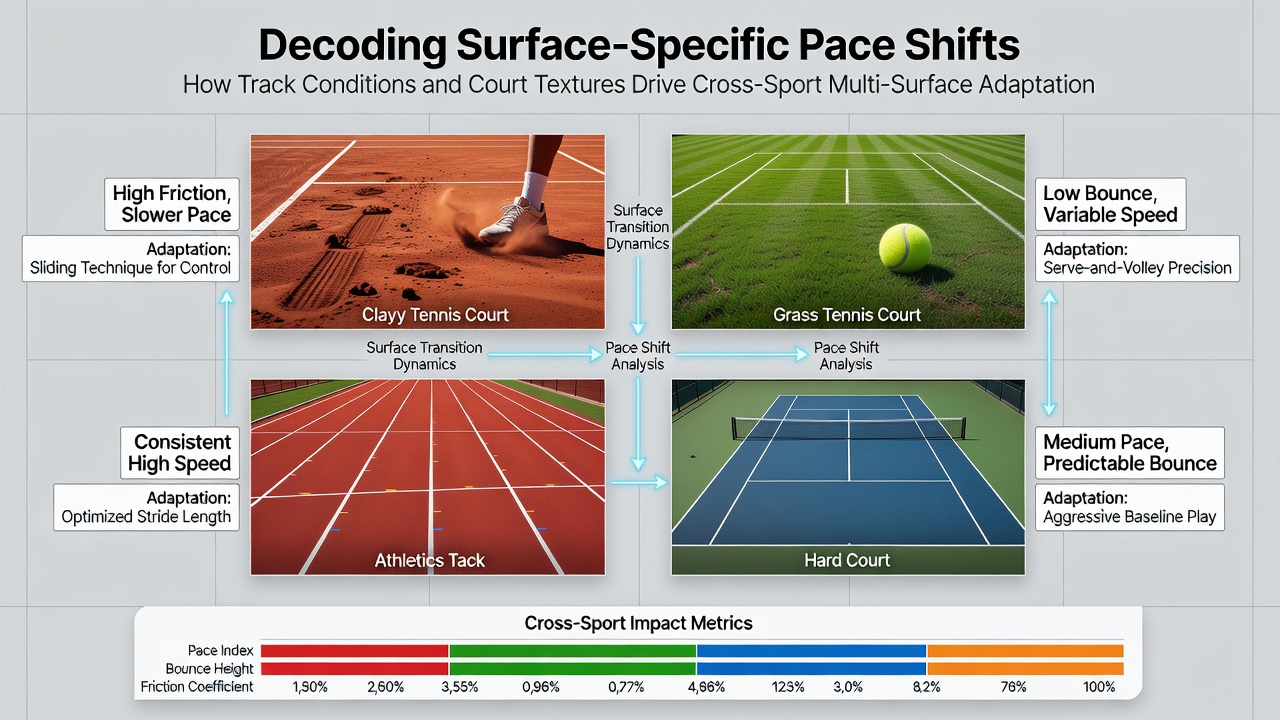
Industry reports from the European Gaming and Betting Association highlight how operators now supply surface-condition data feeds that update in real time. Bettors who integrate these feeds with historical pace charts can adjust stakes across legs when conditions deviate from seasonal averages, particularly during periods of weather volatility that affect both outdoor tracks and uncovered courts.
Regional Variations and Seasonal Patterns
Surface effects differ by geography and time of year. Canadian racing data from Woodbine Racetrack demonstrate that synthetic tracks in cooler spring months produce faster overall times than equivalent surfaces in late summer heat. Meanwhile, records maintained by the Japan Racing Association show that turf courses in early June often favor front-running styles due to consistent moisture retention after spring rains.
Tennis schedules follow parallel seasonal rhythms. The grass-court swing in June produces shorter points and higher service dominance, a pattern that repeats annually according to ATP statistical summaries. When these periods overlap with racing calendars that feature firm tracks, the combined data sets offer expanded options for multi-leg constructions that account for accelerated pace across both disciplines.
Conclusion
Surface-specific pace shifts supply measurable inputs that connect performance across horse racing and tennis. Official records from multiple governing bodies demonstrate consistent patterns in how track composition and court texture alter speed and strategy. Bettors who incorporate these documented variables into multi-leg selections can reference the same data sources used by industry analysts and academic researchers.