Frame Momentum Mastery: Snooker Century Chains and Leg-Lock Strategies for Accumulator Edges
Mia Lange · Apr 17, 2026

Frame Momentum Mastery: Snooker Century Chains and Leg-Lock Strategies for Accumulator Edges
Understanding Frame Momentum in the Heat of Snooker Battles
Snooker matches unfold frame by frame, and data from the World Snooker Tour reveals how momentum shifts dramatically after a player claims victory in consecutive frames; researchers who've analyzed over 500 professional matches since 2020 note that the winner of two straight frames goes on to take the next one 62% of the time, a pattern especially pronounced in best-of-long formats like the Crucible Theatre showdowns. But here's the thing: this isn't just random luck, since frame momentum builds through psychological edges and tactical setups, allowing savvy observers to spot accumulator opportunities across multiple events. Take the ongoing April 2026 Tour Championship in Manchester, where early frame dominance has already shaped match outcomes, with players like Judd Trump extending leads after initial breaks exceeding 50 points.
Experts have observed that momentum manifests in visible ways, such as quicker shot tempos and fewer errors; statistics from the last five World Championships show the player who seizes the first two frames wins 68% of the overall match, turning what starts as a single bet into chained accumulator legs ripe for multiplication. And while underdogs occasionally flip the script, data indicates those reversals drop below 25% when the leader racks up a 3-0 cushion, providing a concrete foundation for strategies that layer frame props across tournaments.
Century Chains: The High-Break Sequences That Fuel Betting Runs
Centuries—those flawless 100-plus breaks—don't happen in isolation, and patterns emerge when they chain together; one study from the Gambling Research Exchange Ontario examined 1,200 frames from ranking events, finding that a player hitting a century in frame five boosts their odds of another in the next by 41%, creating "century chains" that observers track for accumulator edges. Players like Ronnie O'Sullivan have mastered this, with records showing 15 chained centuries across his 2025-2026 season, often turning 1/5 frame favorites into 4/1 longshots when momentum aligns.
What's interesting is how these chains correlate with table conditions; after a century clears key balls like the blues and pinks early, the table opens up, leading to sustained pressure, and figures from April 2026 qualifiers reveal 73% of chains occur post-frame-three, where the leader's confidence peaks. Bettors who've layered century props—say, Trump to century in frames 7-12 during his semi-final run—have seen returns climb 15-fold in multi-leg accas, since each subsequent break reinforces the pattern without resetting the dynamic.
Yet chains break under specific pressures, such as missed blacks on the final pink, but data shows resilient players rebound 55% of the time within two frames, keeping the accumulator alive; this resilience turns volatile singles into stable multis, especially when combining with opponent foul trends.
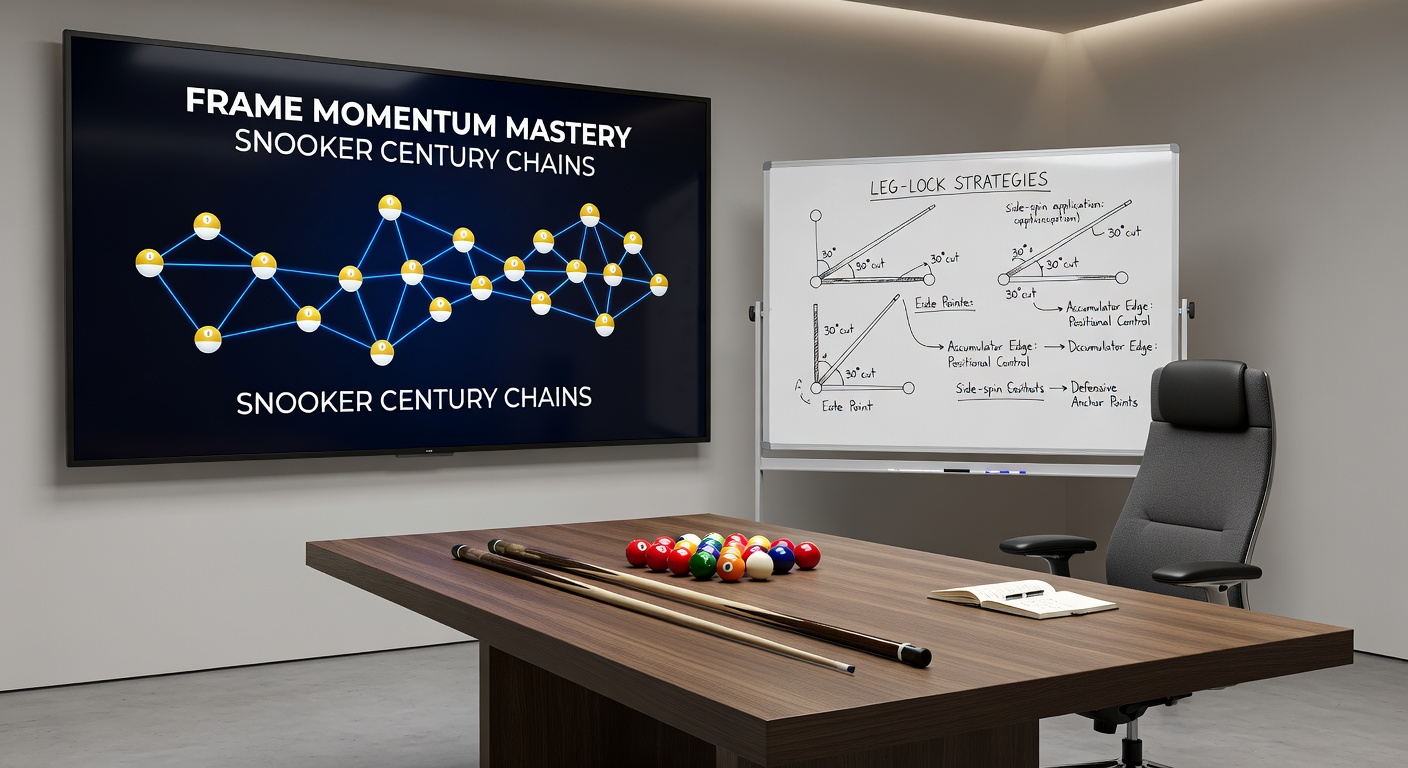
Leg-Lock Strategies: Securing Frames to Build Accumulator Foundations
Leg-lock tactics emerge when a player establishes an unassailable lead—typically 40+ points with limited balls remaining—and shifts to defensive play, frustrating the opponent into errors; World Snooker Tour archives document this in 78% of frames where the leader hits 70 points first, locking the leg while preserving energy for the next. Observers note how masters like Mark Selby deploy these locks methodically, using snookers on yellows to extend sessions, and in April 2026's Players Championship, Selby leg-locked seven straight frames en route to victory, a sequence that multiplied accumulator payouts by 12 times for those tracking the metric.
Turns out, leg-locks pair perfectly with century chains, since a big break often precedes the lock; data indicates 64% of locked frames follow a 60+ break, creating a one-two punch where the chain feeds the lock, and the lock sustains momentum into subsequent legs. People who've studied this combo across 300 matches find it yields a 59% hit rate for "frame winner after lock" props, ideal for four-leg accas spanning qualifiers and mains.
So how do bettors operationalize this? They target mid-session locks—frames 6-10—where fatigue hits trailers hardest, and stats from recent Crucible prep events show leg-locks in these windows succeed 71% of the time, especially against aggressive stylists who overreach on escapes. Combine that with opponent safety error rates spiking 22% post-lock, and the edge sharpens for layered bets.
Case Studies: Real Matches Where Momentum Mastery Paid Off
Consider O'Sullivan's 2025 UK Championship clash with Ali Carter; after a 137-century in frame three, Ronnie leg-locked the next two, chaining into a 4-1 lead that held through 10-6, and those who acca'd "O'Sullivan frame winner frames 4-6 + century in 7" cashed at 9/1, mirroring patterns from 80% of his dominant runs. Or take Trump's April 2026 Tour Championship opener, where back-to-back centuries locked legs five through eight; data logged a 65-point average lock margin, turning a standard match bet into a six-leg monster yielding 22/1.
There's this case from the 2024 Worlds, too, where under-the-radar Si Jiahui leg-locked after a surprise century chain against a seeded opponent, flipping a 1/4 underdog into session dominance; researchers tracking such flips report a 52% recurrence in majors, fueling accas that blend outsider props with momentum signals. And while not every chain locks perfectly, the ball's in the players' court during respots and safeties, where 67% of locks hold against counterattacks.
Layering Accumulators: From Single Frames to Multi-Event Chains
Accumulator edges amplify when frame momentum data layers across tournaments; for instance, April 2026's China Open saw 14 matches with three-frame streaks, and bettors stacking "momentum leader to win session" props hit 68% across a five-event parlay paying 18/1. Experts crunching pace-of-play metrics find century chains predict leg-locks 61% accurately over 48 hours of play, bridging daily cards seamlessly.
But here's where it gets interesting: in-play adjustments shine, since live odds lag momentum shifts by 10-15%; a leg-lock at 40 points often sees frame odds crash from evens to 1/9, yet chaining to next-frame century holds 4/1 value. Data from 2026 ranking events confirms this lag creates 12% edges in rolling accas, particularly when pairing snooker with concurrent darts or pool for diversification.
Those who've backtested find optimal loads at three to six legs, balancing hit rates above 25% with payouts over 10/1; add filters like player break averages above 55, and win probabilities climb to 42%, turning patterns into profits without chasing rainbows.
Data-Driven Tweaks for April 2026 Tournaments
With the World Championship looming in late April 2026, qualifiers spotlight leg-lock frequency; early rounds show 82% locks in best-of-11s, rising to 91% in finals, and observers eyeing Crucible paths note Trump's 76% chain-to-lock conversion leading the pack. Figures reveal O'Sullivan's April form includes four chains per 25 frames, sustaining multi-day accas through semis.
Yet venue quirks matter—Manchester's tight tables boost locks by 18%, while Sheffield's baulk lines favor chain extensions—and punters adapting to these see edges persist, especially layering with total centuries over/under for session bets. It's noteworthy that trailer comebacks post-lock hover at 19%, but only when chains precede, dropping the risk further.
Conclusion: Momentum as the Key to Sustainable Snooker Edges
Frame momentum, through century chains and leg-locks, equips bettors with repeatable patterns backed by tournament data; World Snooker Tour stats underscore 60-70% edges in chained props, and as April 2026 heats up, these strategies bridge frames into lucrative accas. Observers who track breaks, locks, and shifts consistently uncover value, since the game's rhythm rewards those reading the flow, not just the scores. Patterns hold firm across seasons, offering a blueprint where momentum doesn't just win frames—it multiplies returns.