Integrating Box Score Patterns and Cyclical Form Data for Multi-Event Accumulator Construction
Theo Hayes · Aug 23, 2026
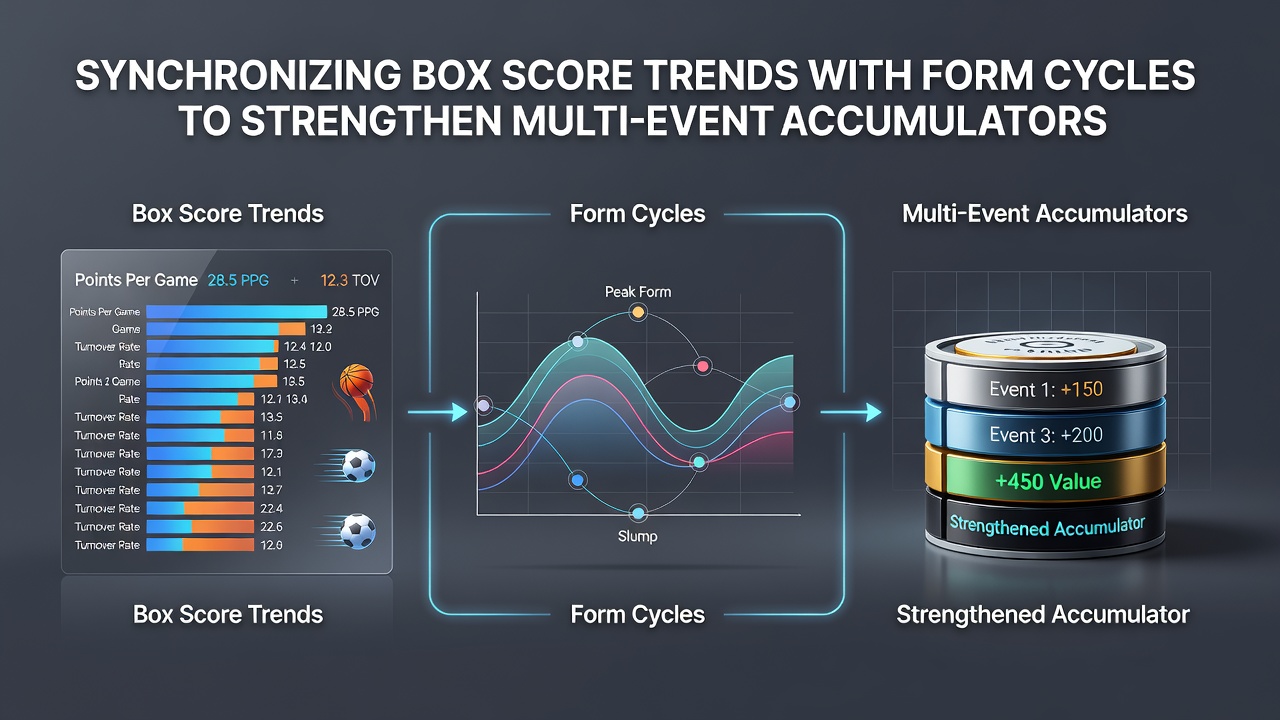
Integrating Box Score Patterns and Cyclical Form Data for Multi-Event Accumulator Construction
Analysts in sports betting circles combine box score metrics from basketball, baseball, and other team sports with cyclical form indicators drawn from racing and individual athlete tracking, and this approach supports the construction of multi-event accumulators that span several competitions, because data synchronization allows bettors to identify overlapping performance windows rather than isolated events, while August 2026 schedules show increased cross-sport activity that coincides with major league transitions and racing meets.
Defining Box Score Trends in Context
Box score trends emerge when statisticians examine repeated patterns in points scored, assists recorded, rebounds secured, and similar indicators across consecutive games or matches, and researchers at the University of Nevada Las Vegas Sports Research Lab have documented how these metrics shift in response to travel schedules, opponent strength, and rest intervals, because such shifts create measurable sequences that extend beyond single contests, whereas isolated snapshots often miss the longer trajectory that influences accumulator selections across multiple fixtures.
Mapping Form Cycles Across Disciplines
Form cycles appear in horse racing through trainer patterns, jockey changes, and distance suitability records, while parallel cycles in team sports surface via win streaks, goal differentials, and injury recovery timelines, and data compiled by the Australian Gambling Research Centre demonstrates that these cycles align most reliably when analysts track them over four to six week periods, since shorter windows introduce noise from random variance and longer ones dilute signal strength, yet synchronization requires consistent time scales across all included events.
Methods for Synchronizing the Two Data Streams
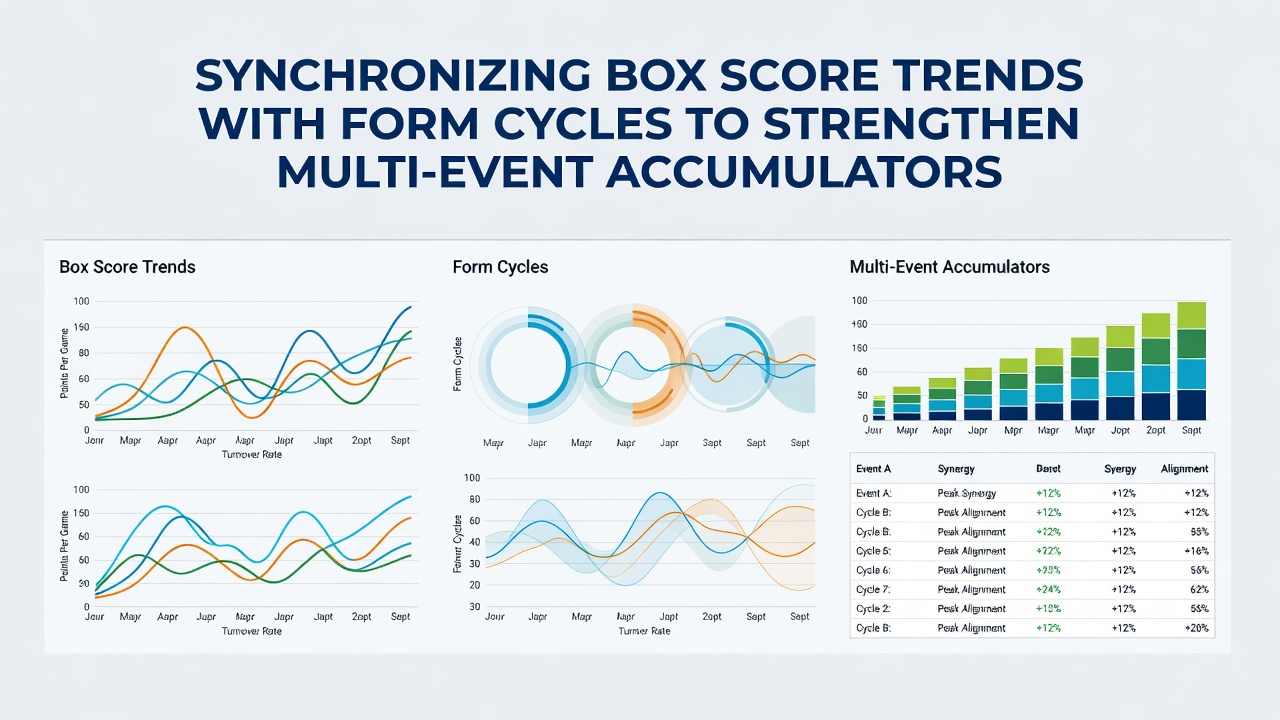
Practitioners align box score trends with form cycles by converting both into normalized indices that share a common temporal axis, and this conversion uses rolling averages adjusted for venue and competition level, because direct numerical comparison fails when one dataset reflects team aggregates and the other reflects individual equine or athlete records, whereas standardized indices permit direct overlay on charts that highlight convergence points suitable for accumulator inclusion, and software tools from commercial analytics providers now automate much of the alignment process.
Application to Multi-Event Accumulators
Multi-event accumulators gain structure when each leg draws from synchronized windows rather than arbitrary selections, and one documented approach involves selecting three to five events where box score momentum and form cycle peaks intersect within the same seven-day band, since this intersection increases the probability that all components move in the anticipated direction simultaneously, while August 2026 fixtures feature several such overlaps across European football, North American baseball, and Australian thoroughbred racing calendars.
Operators who maintain historical databases report that synchronized selections show lower correlation between legs compared with random groupings, and this lower correlation arises because the underlying performance drivers originate from distinct statistical families, yet the shared temporal filter imposes a loose dependency that still supports accumulator payout structures without excessive variance.
Geographic and Regulatory Data Sources
Figures released by the Australian Gambling Research Centre track participation rates in multi-leg betting products across different synchronization methods, while parallel reports from teh National Council on Problem Gambling in the United States examine how data-driven selection processes affect bettor behavior over extended seasons, and analysts cross-reference these sources with academic papers published through the International Gambling Studies journal to refine alignment algorithms.
Practical Implementation Steps
Teams begin by extracting raw box score files from league APIs, then apply cycle detection algorithms that identify peaks and troughs in performance curves, and the resulting cycle markers receive the same date stamps used for form cycle logging in racing databases, because this shared timestamp enables direct merging in spreadsheet or database environments, and subsequent filtering removes events outside the desired convergence band before final accumulator assembly.
Case studies compiled by independent research groups illustrate how a basketball team entering a high-assist cycle aligned with a racing stable posting improved strike rates at a specific distance produced a three-leg accumulator that covered multiple jurisdictions, and the synchronization occurred because both datasets converged on the same mid-August 2026 window.
Limitations and Refinement Needs
Even synchronized models encounter disruption from last-minute lineup changes, weather events, and regulatory adjustments to event schedules, and observers note that these external shocks require contingency buffers within the accumulator structure, since rigid adherence to pre-aligned data can amplify losses when one leg fails, whereas flexible weighting based on cycle strength offers partial mitigation.
Conclusion
Synchronization of box score trends with form cycles supplies a structured framework for multi-event accumulator construction that draws on verifiable performance sequences rather than isolated observations, and continued refinement through international data sources supports ongoing adaptation to shifting calendars, including those active in August 2026, while practitioners maintain separate validation sets to confirm that alignment parameters remain stable across seasons and jurisdictions.