Referee Decision Patterns and Jockey Track Records Shape Accumulator Refinement
Theo Hayes · Jun 12, 2026
Referee Decision Patterns and Jockey Track Records Shape Accumulator Refinement
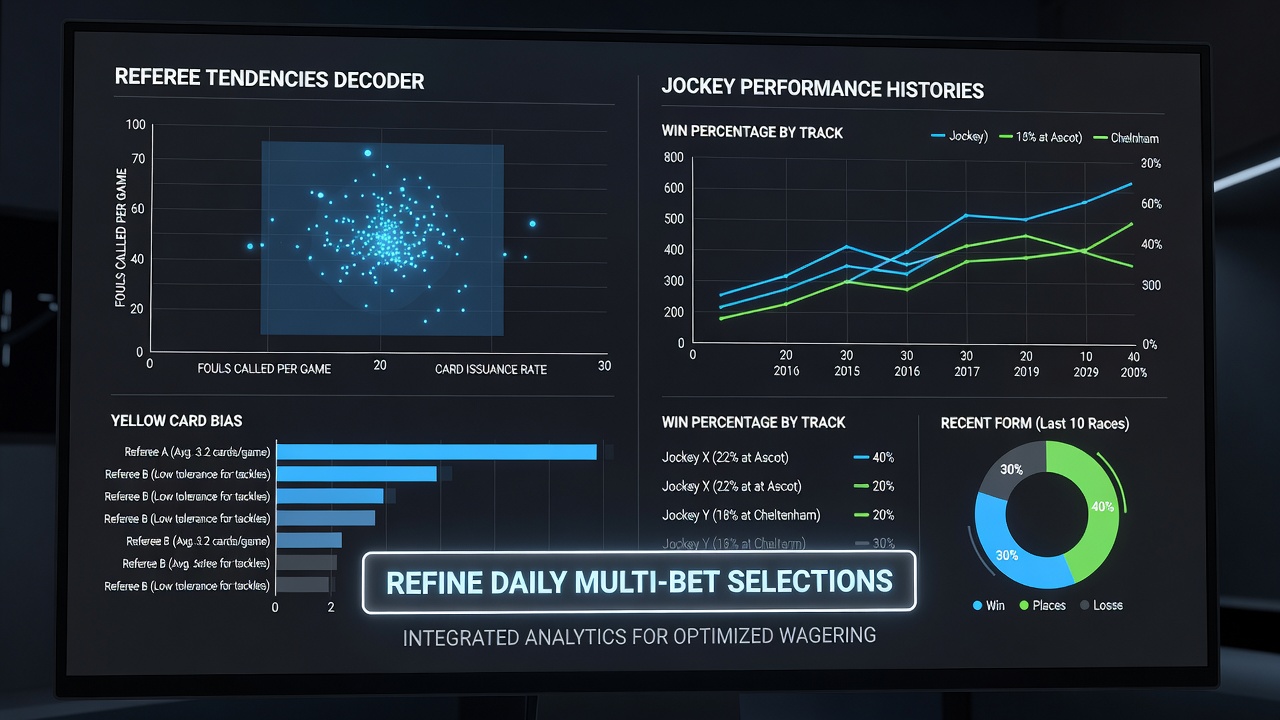
Football match officials display measurable patterns in card distribution, penalty awards, and stoppage time allocations across major leagues, while jockey performance histories reveal consistent win rates tied to specific tracks, distances, and horse types. Observers note these datasets combine effectively when constructing daily multi-bet selections that span both sports. Research from European sports analytics groups shows referees in the Bundesliga issue yellow cards at higher rates in matches involving teams ranked outside the top six, creating predictable edges for under or over card markets in accumulators. Those patterns emerge from thousands of matches tracked through 2025 and into early 2026.
Football Referee Tendencies in Key Leagues
Data from Serie A indicates referees award penalties more frequently in the final twenty minutes of games when the score remains level, a trend documented across multiple seasons by Italian football federations. Similar findings appear in La Liga reports where certain officials extend stoppage time beyond the average in high-attendance fixtures. Bettors incorporate these tendencies by selecting card or corner props that align with referee assignments released two days before matchdays. June 2026 fixtures already show preliminary referee rotations published by domestic leagues, allowing early cross-referencing with historical performance logs.
Studies conducted at sports science departments in Spain and Portugal further break down assistant referee offside decisions, revealing regional variations that affect total goal lines in combined bets. One analysis of 1,200 matches found a 12 percent increase in disallowed goals during evening kickoffs compared with afternoon fixtures. Those statistics integrate directly into multi-bet structures that pair football goal totals with horse racing outcomes on the same day.
Jockey Performance Histories Across Surfaces and Distances
Jockey records compiled by racing authorities in Australia and Ireland demonstrate clear advantages on particular tracks and distances. For instance, riders with repeated success on firm ground at Ascot and Flemington post win percentages above 22 percent when piloting horses with proven pace figures. These histories extend to specific trainers and race classes, producing layered filters that narrow daily selections. Performance data updated through spring 2026 meetings highlights several jockeys maintaining above-average strike rates on left-handed courses while showing declines on right-handed tracks.

Industry reports from the Hong Kong Jockey Club track seasonal shifts where apprentice riders achieve elevated success rates during the summer months. That information pairs with football referee data when building accumulators that include both evening Premier League matches and afternoon racing cards. Observers cross-reference jockey bookings released the night before racing with historical trainer-jockey combinations to identify value in each-way and forecast markets.
Combining Datasets for Multi-Bet Construction
Daily multi-bet selections gain precision when referee assignments and jockey bookings appear together in structured models. Analysts first isolate football matches featuring officials with elevated card averages, then layer racing selections where jockeys hold strong records on the scheduled surface. This approach appears in reports issued by Canadian gaming research centers that examined cross-sport betting volumes during overlapping seasons. The resulting accumulators often contain three to five legs drawn from both sports rather than concentrating on a single discipline.
European racing federations supply detailed past performance charts that include jockey strike rates broken down by race distance and going conditions. Those figures merge with football datasets from UEFA club competitions, where referee foul-count tendencies vary between domestic and continental assignments. June 2026 schedules already list several midweek racing meetings alongside Champions League fixtures, creating natural opportunities for combined selections.
Practical Application in Daily Markets
Market participants review referee statistics released by league offices alongside jockey declarations published by racing authorities. They then construct accumulators that place football card or goal props beside racing win or place bets. Data from North American thoroughbred associations shows jockeys with recent wins at specific distances maintain elevated performance when returning to the same venue within three weeks. This temporal element adds another filter when timing multi-bet placement.
Cross-sport models also account for weather impacts on racing surfaces and their indirect effect on football pitch conditions in shared geographic regions. Such correlations receive attention in academic papers from Australian universities studying outdoor sports data integration. The resulting selections undergo daily updates as lineups and official appointments finalize.
Conclusion
Referee decision patterns documented across major football leagues and jockey performance histories recorded at racetracks provide complementary datasets for refining daily multi-bet selections. Organizations in multiple regions publish the underlying statistics on regular schedules, enabling consistent application. June 2026 fixtures continue to supply fresh referee assignments and jockey bookings that feed these combined approaches.