Venue Fatigue Integration for Cross-Sport Parlay Construction
Rafael Albrecht · Jul 22, 2026
Venue Fatigue Integration for Cross-Sport Parlay Construction
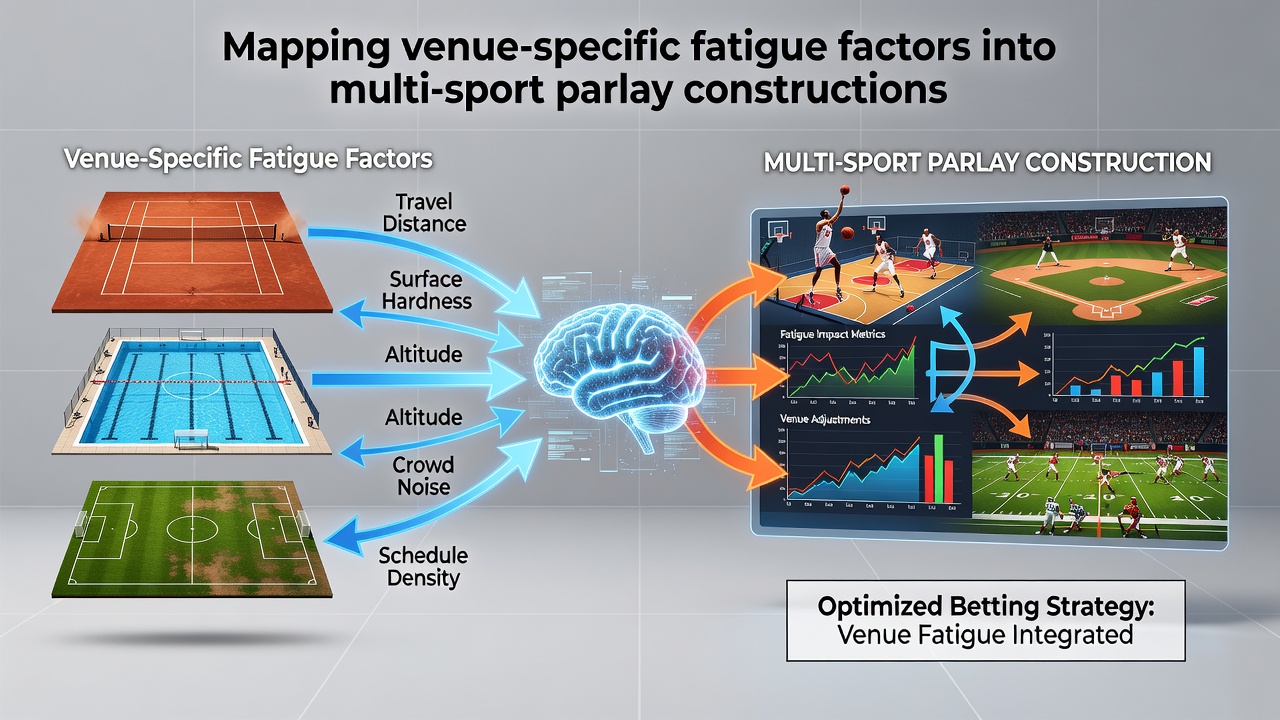
Mapping venue-specific fatigue factors into multi-sport parlay constructions requires systematic analysis of location-based variables that affect athlete performance across different disciplines, and analysts combine these elements with schedule data to refine selections in accumulator formats. Travel distance, altitude differentials, climate conditions, and back-to-back venue demands create measurable impacts that extend beyond single-sport contexts, while researchers track how these variables interact when bettors layer outcomes from basketball, soccer, tennis, and other events into one wager structure.
Core Venue Fatigue Components
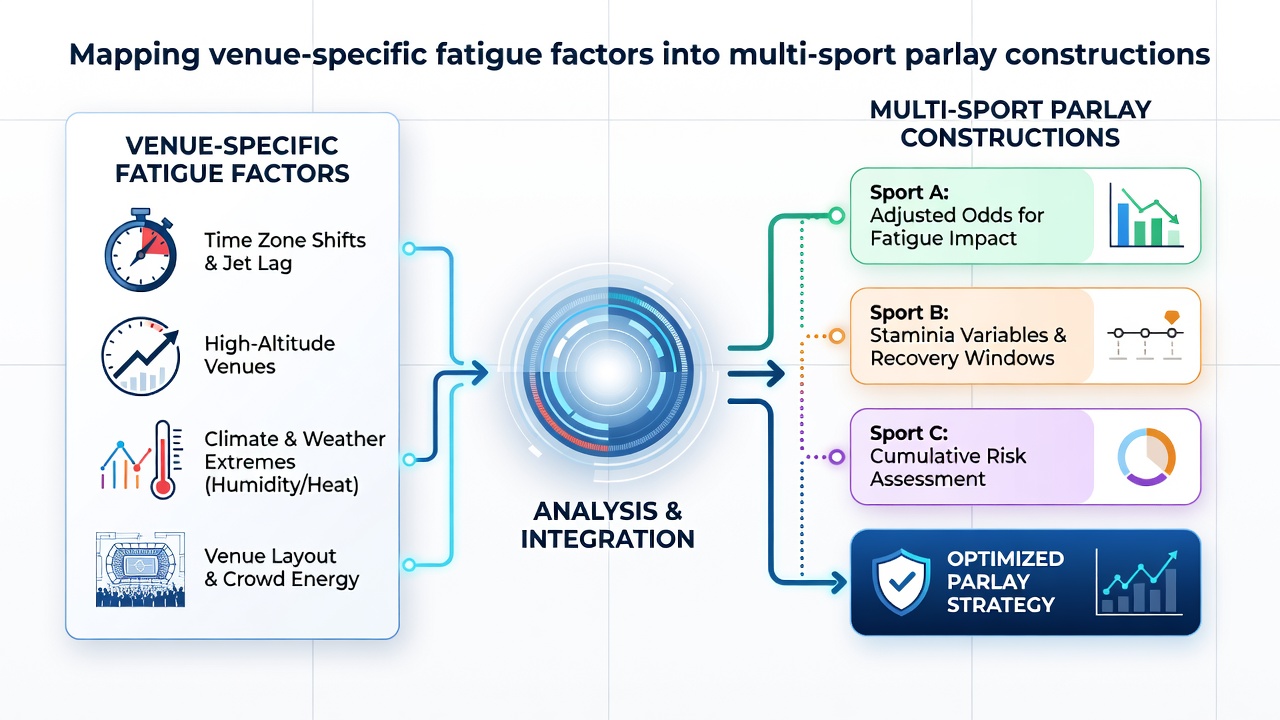
Altitude stands out as a primary driver because events held above 1,500 meters reduce oxygen availability and force physiological adjustments that lower explosive output in the first 48 hours of arrival, yet athletes who train at elevation show smaller declines, and data from multi-site tournaments illustrates how home teams at sea level versus visitors from high-altitude bases produce consistent performance gaps. Climate factors compound this effect when venues shift from indoor climate-controlled arenas to outdoor fields with high humidity or extreme heat, since recovery windows shrink and muscle fatigue accumulates faster under those conditions.
Travel logistics add another layer because transcontinental flights disrupt circadian rhythms and increase injury risk in the subsequent 72 hours, whereas short domestic hops allow quicker adaptation; league schedules that cluster games in one city versus those requiring repeated cross-country jumps therefore generate different fatigue baselines that parlay constructors must weigh when pairing selections from separate sports. Back-to-back venue usage creates cumulative load when teams play consecutive nights in the same arena or stadium, and studies of NBA and European soccer calendars reveal elevated error rates in later games that carry forward into midweek fixtures.
Applying Fatigue Layers Across Sports
Parlay builders start by tagging each leg with venue metadata that includes recent travel history, altitude delta from the team's base, and days since the last high-load match, then they apply weighting coefficients derived from historical performance splits. For instance, a basketball team arriving at a high-altitude western venue after an east-coast game the previous night receives a fatigue multiplier that adjusts projected efficiency downward, while a soccer side playing at a coastal stadium following a short flight keeps a neutral rating. Combining these adjusted projections across leagues produces more calibrated probability estimates for the overall parlay than raw averages allow.
July 2026 schedules introduce additional variables because summer tournaments and exhibition series often place teams in unfamiliar climates and compressed timelines, and observers note that early-round matches at new venues frequently show higher variance until adaptation occurs. Tennis events scheduled on successive surfaces in different countries amplify recovery demands because players must adjust movement patterns and muscle groups within short intervals, which creates opportunities to identify legs where fatigue edges are understated in standard odds models.
Data Sources and Integration Methods
Performance databases maintained by organizations such as the NCAA and the Australian Institute of Sport supply granular travel and venue statistics that feed algorithmic models, while academic papers from sports medicine departments quantify recovery timelines under varied altitude and climate exposures. Bettors who incorporate these inputs into construction workflows typically layer venue tags onto player availability reports and pace metrics, then test historical parlay outcomes against fatigue-adjusted simulations to identify where standard projections diverge from actual results. One documented approach involves assigning point deductions for each hour of time-zone change and each 500-meter altitude gain, then recalibrating totals before finalizing accumulator combinations.
Schedule density reports from league offices further refine these models because clusters of home stands versus road trips produce measurable differences in late-season outputs, and cross-referencing these patterns with weather archives at specific stadiums adds precision to outdoor sport legs. Multi-sport constructions benefit particularly when fatigue signals align across unrelated events, such as a fatigued basketball squad paired with a soccer team facing a similar travel burden, since correlated performance dips can either amplify or offset depending on the direction of the adjustment.
Practical Construction Workflow
Analysts begin by compiling a venue matrix that lists every upcoming location with its associated fatigue indicators, then they score each participating team on a standardized scale before feeding the values into probability software. Next they select legs where the fatigue-adjusted edge exceeds market pricing, and they test combinations to ensure no single venue variable dominates the entire parlay structure. Iterative backtesting against completed seasons reveals which fatigue thresholds produce the strongest filtering rules, allowing builders to exclude or include specific matchups with greater consistency over time.
Conclusion
Venue-specific fatigue mapping supplies a structured framework for refining multi-sport parlay selections by converting location and schedule data into quantifiable adjustments that improve alignment between projected and realized outcomes. Continued refinement of these methods depends on expanding datasets from additional leagues and tournaments, while integration of real-time weather and travel updates keeps the models responsive to evolving conditions.